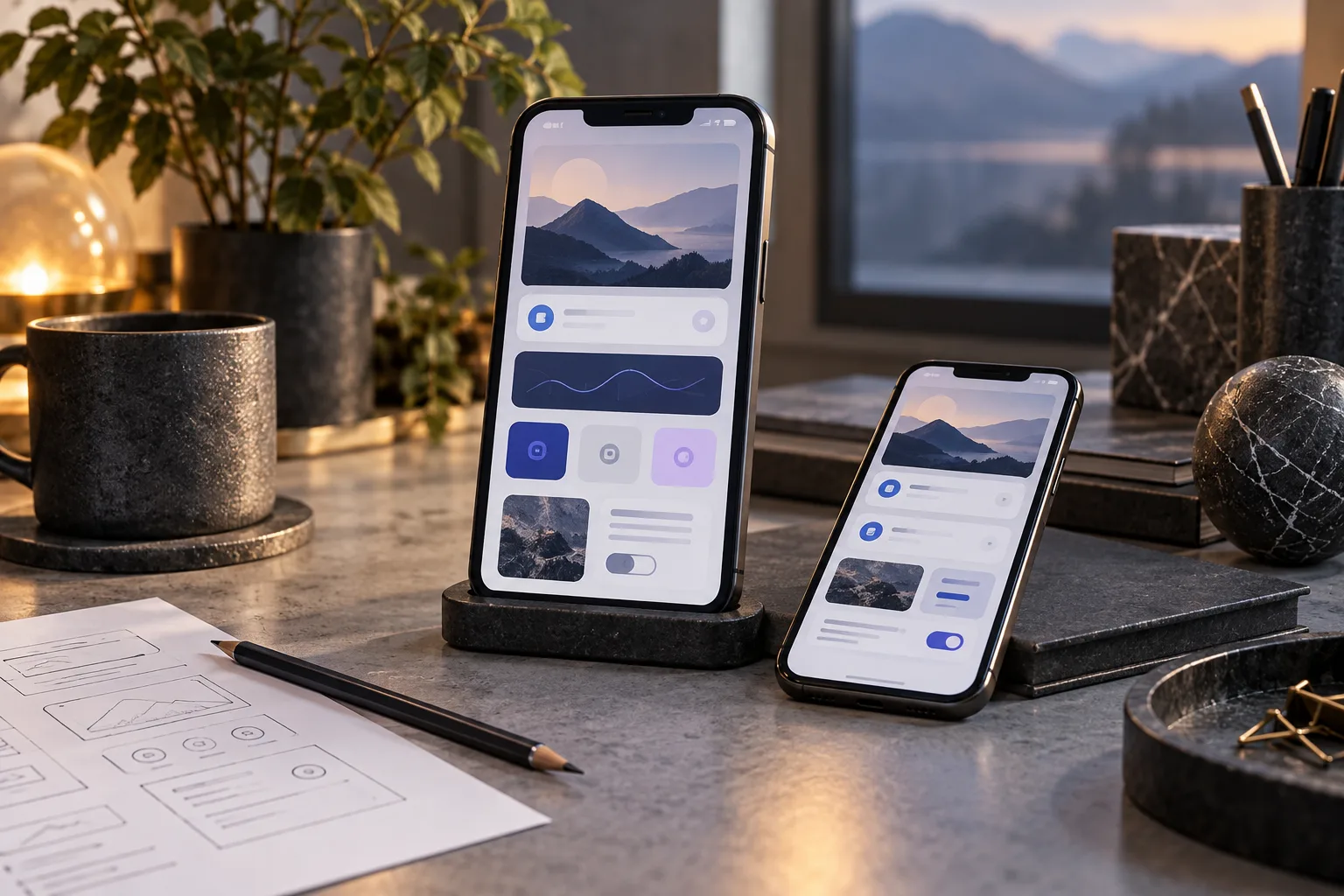
A mobile app earns its place on a phone by making a task easier. We develop Flutter applications around that task: what someone needs to do, the information they need and the conditions in which they will use the app.
One product, two mobile platforms
Flutter provides a shared foundation for Android and iOS. We define the reusable parts and identify platform-specific permissions, integrations and interface behaviour early. A shared codebase still needs testing on the devices and operating systems your audience uses.
From the first screen to the backend
The scope can cover account access, API integration, notifications, forms, local storage and synchronisation. We make loading, empty, error and offline states part of the design. When a backend is required, its responsibilities and operating costs are planned alongside the app.
A release that can be maintained
We organise the work into reviewable stages: requirements, key screens, implementation, testing and release preparation. Store accounts, privacy information, permissions and signing requirements are addressed before submission. Store approval remains the decision of the platform.
Capidock is a Zephyrus product built with Flutter. Explore Capidock to see its mobile interface and current features.
Start with the problem and the audience
Tell us who will use the app, its essential workflows, any existing systems and the platforms you need. We use that information to define scope, milestones and acceptance criteria. Ownership, handover, third-party costs and ongoing maintenance are set out in the proposal.